KOOOK / Sarah Illouz & Marius Escande
KOOOK / Sarah Illouz & Marius Escande
Over de kunstenaar
Working together since 2021 between Paris and Brussels.
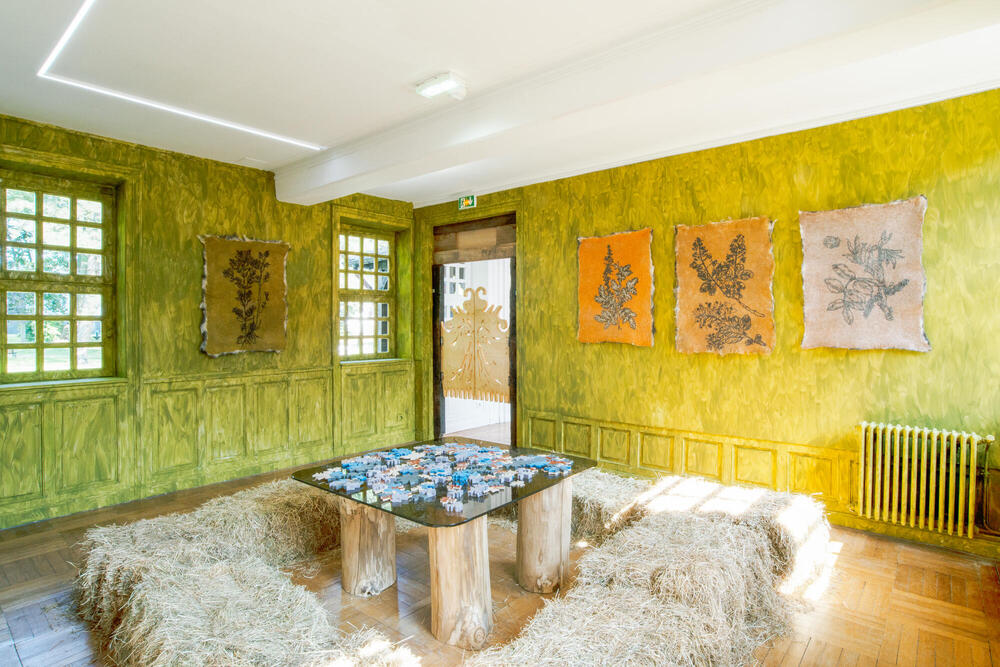
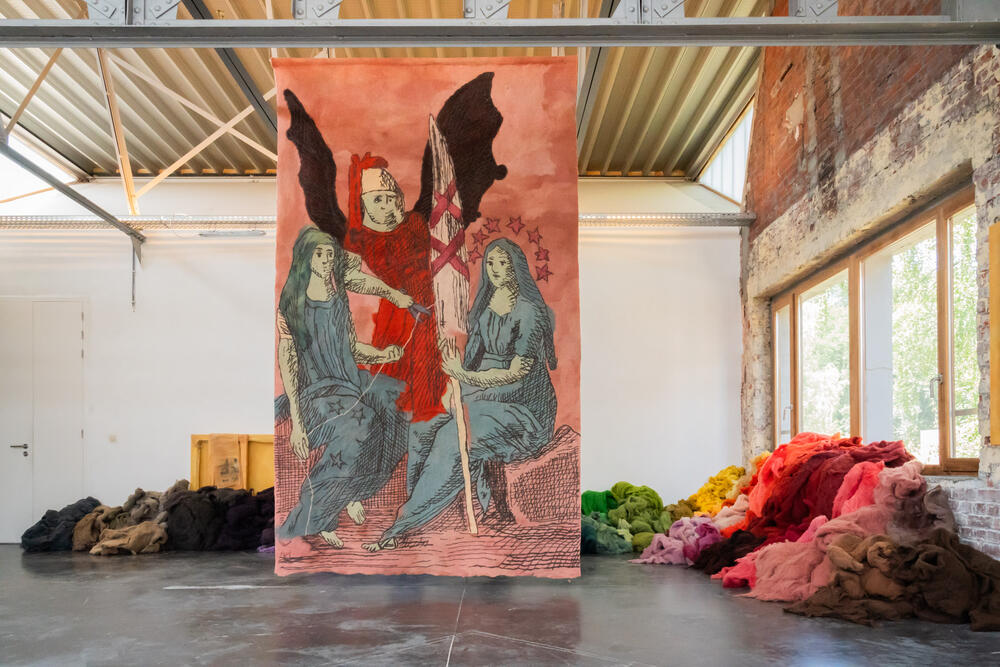
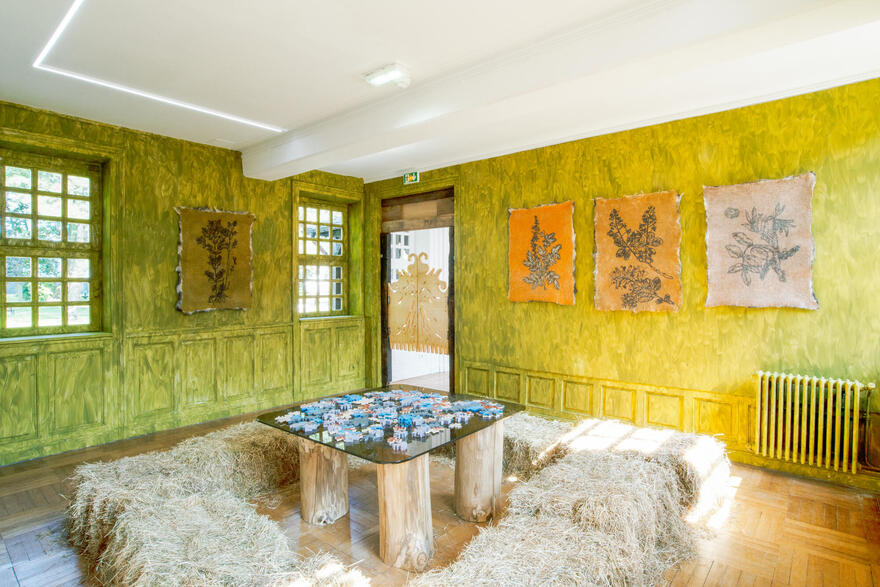
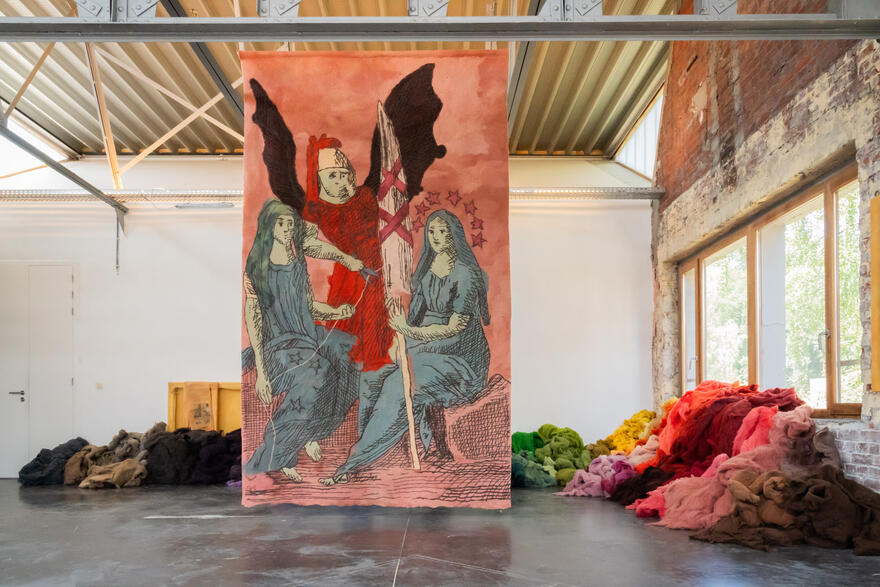
The practice of Sarah Illouz and Marius Escande is driven by an ethics and way of life which encompasses every stage in the production of their artistic ecosystem: from the search for materials to the formal results, by way of various circumstantial collaborations. The use of felt and its implementation in tapestry, for example, led them to delve into the
wool industry in Belgium, meeting breeders, shearers, sorters, traders and manufacturers with whom they maintained a dialogue at every stage of the material’s transformation.
The material is not only used for its aesthetic qualities, but for its symbolic and economic significance.
Their aim is to return to the source of the material, but also to accompany it through all its cycles, beyond its finitude.
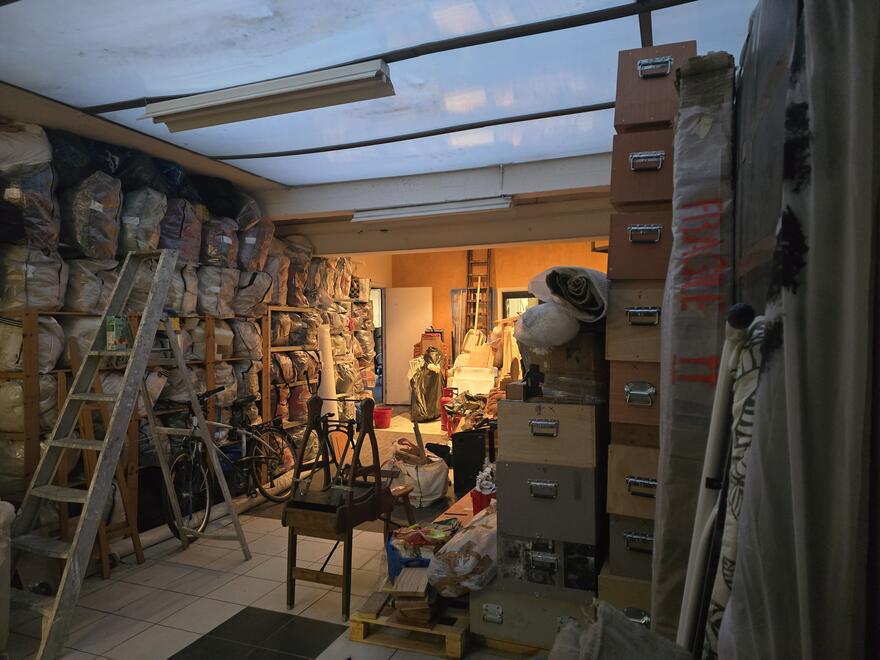
Sarah Illouz and Marius Escande practice an exhaustive recycling process in which each scrap is used, finds a new place, a new purpose, and acquires a surplus of existence. Contrary to capitalist production and performance standards, their artistic expression and all the stages that precede it can only take place over a necessary long, extended period, consistent with one of their leitmotifs: good things take time.
While there is still room for accidents, materials undergo a demanding manual process, and emerge as the artists experiment with them. The gestures of both artists blend and merge until it is no longer possible to tell which
hand is responsible for what. While the ecosystems and items in each installation migrate from context
to context, each element is nonreproducible – like a unique time capsule, which seals the encounter between a precise moment and a given action.
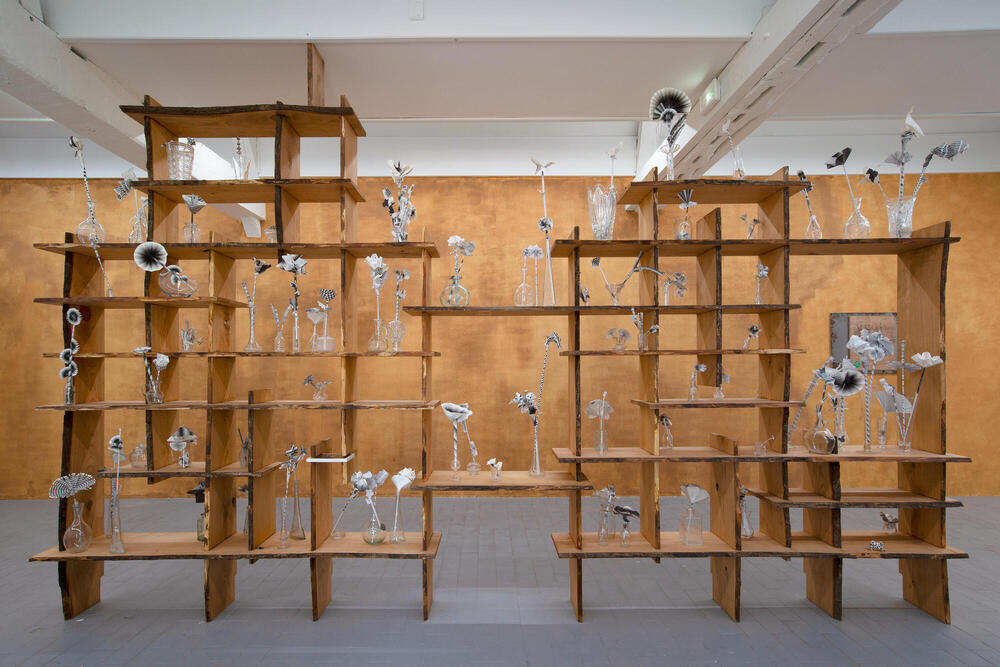
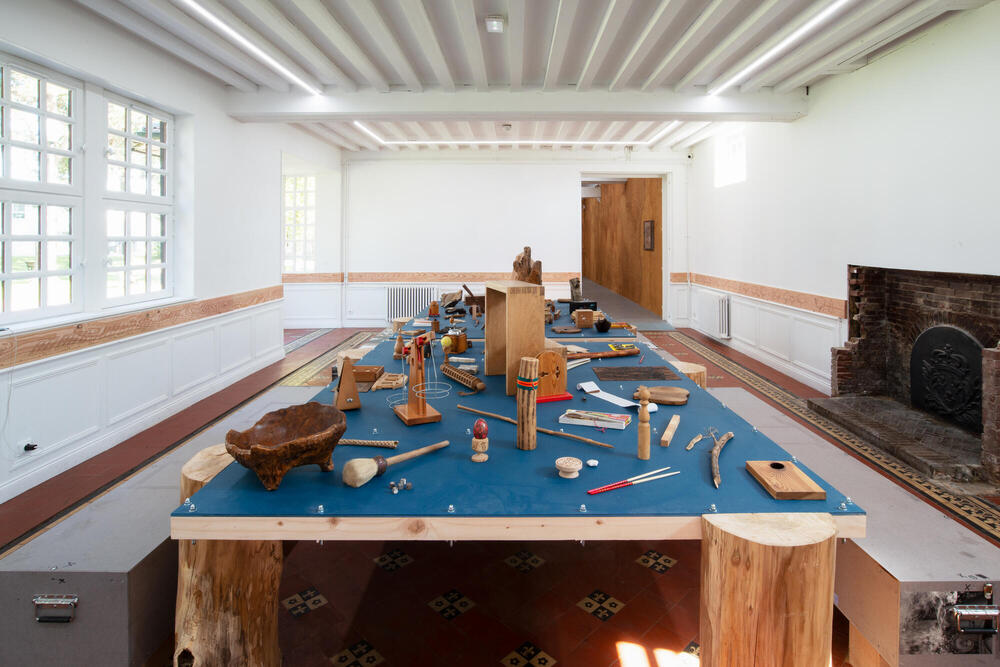
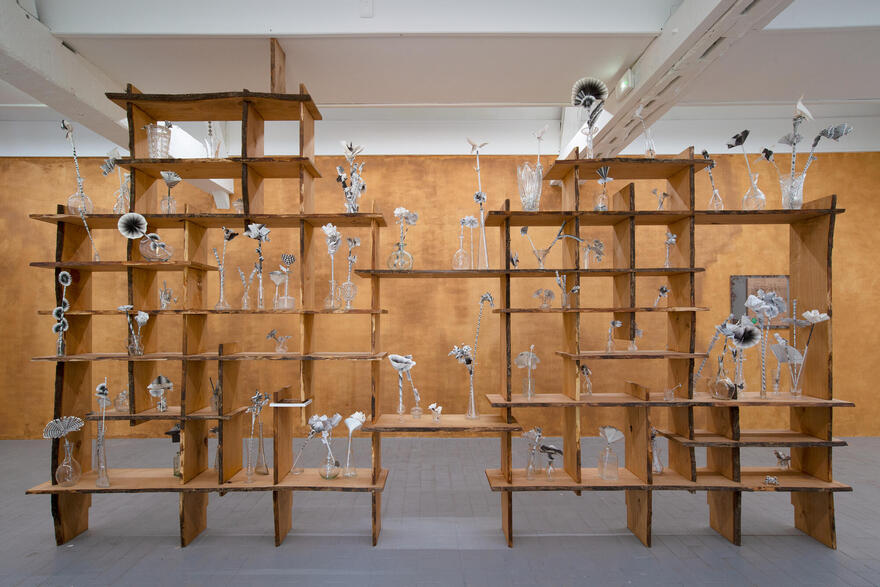
New spaces for life and ways of coming together emerge from the materials’ accidents and the temporal rifts carved by their practice within our productivity-driven rhythm. It’s within this context that tapestries, bookcases, and doors take on new agency, one that is no longer merely functional, but also aesthetic and organic.
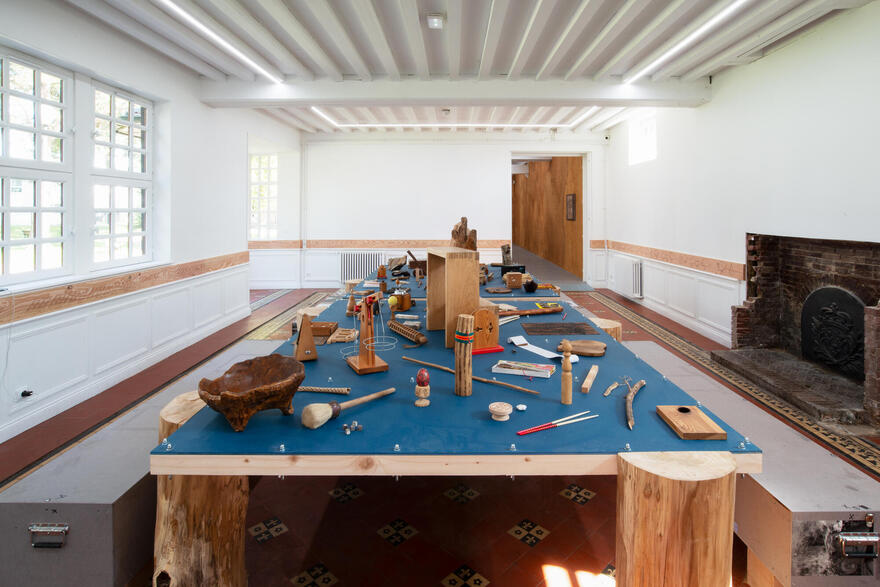
Guided by Emanuele Coccia’s assertion that «we truly only inhabit things», the artists are not concerned with the exterior form of a house. Rather, as a duo they focus on its contents and the abundance of energies inhabiting it. Each element interacts with the rest according to patterns derived from their drawings, moving across media as if in a great game of assemblage. From the collaborative design of the devices to their encounters with the public, the latter are invited to interact with the works, spontaneously walking through their doors, seeing through them, picking up or adding books in the library, while gathering and exchanging.
Their visual transpositions also enable them to explore the dominant historical narrative and formulation of commonly accepted myths, in a back-and-forth movement between these different versions and their contemporary re-actualisation.