Time for textiles
How do you choose from those 1,700+ studios? Explore the website, scroll through, and discover all those unique locations. Don't have much time to scroll? Then we're happy to offer you some tips and lists, like these studios with a variety of textile techniques and perspectives.
Studio Texture
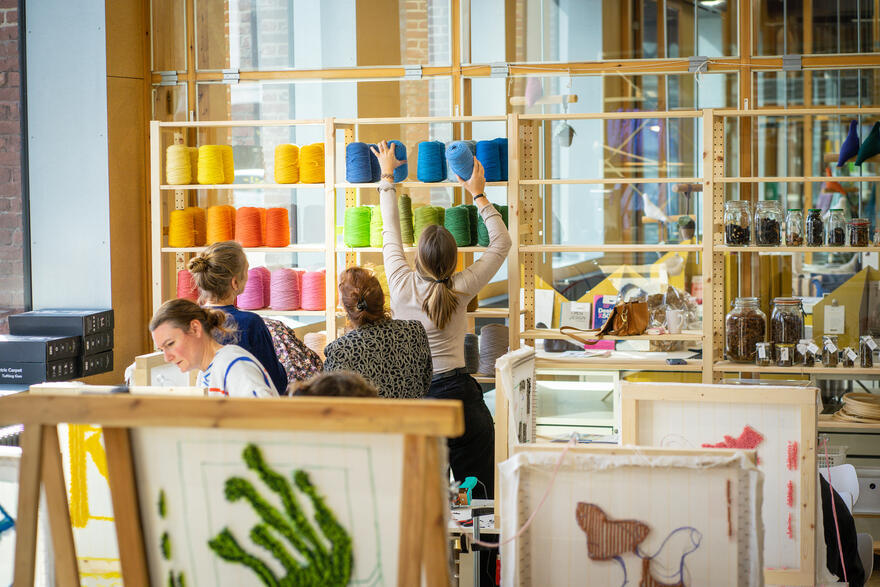
Studio Texture is the place in the Texture Museum in Kortrijk where you can experiment with textile techniques and soft materials. We pass on the craftsmanship of yesterday and today, using it as inspiration for tomorrow's applications and materials. From fiber spinning to flax composite.
Be inspired by our workshops and masterclasses, meet other makers, and get hands-on with our tools and materials. We're building an open, shared workspace for both professionals and enthusiasts, with time and space for sustainable, curious, and forward-thinking experiments.
On Saturday, May 2nd, you can experience an open tufting workshop (from 11:00 AM to 5:00 PM).
Mrs. Jagger
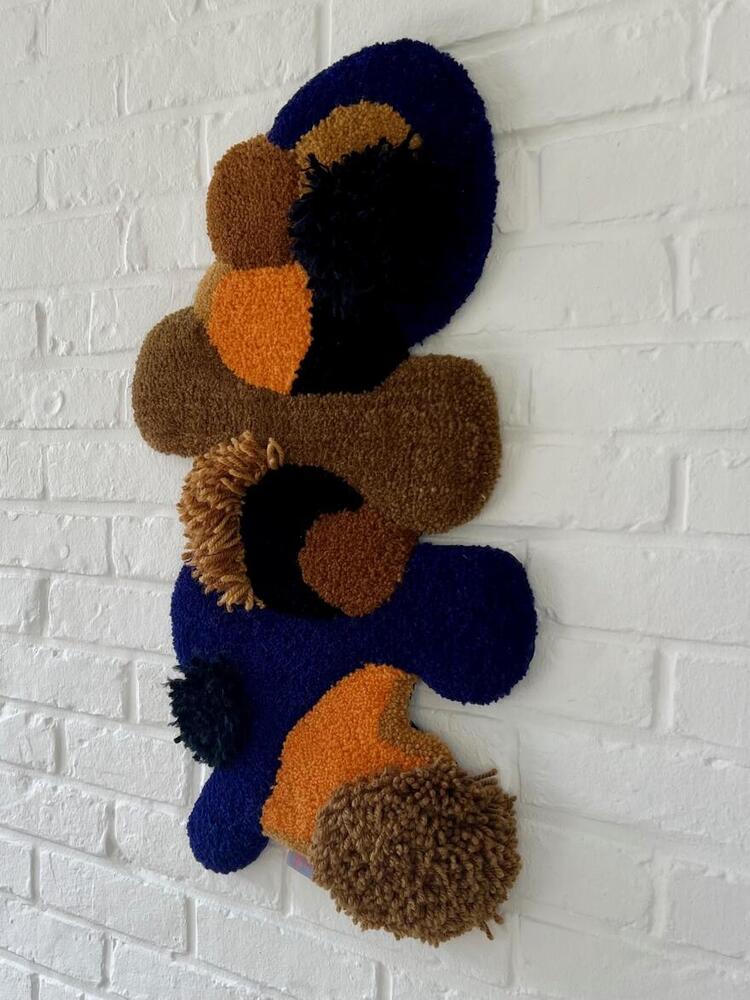
Mrs. Jagger (aka Elke Blyweert) has long been passionate about art and creativity, but she's only recently begun to express it publicly. Her "tufties" (hand-tufted tapestries) are characterized by innovative and striking color combinations and shapes. Real eye-catchers!
Bries Geerts
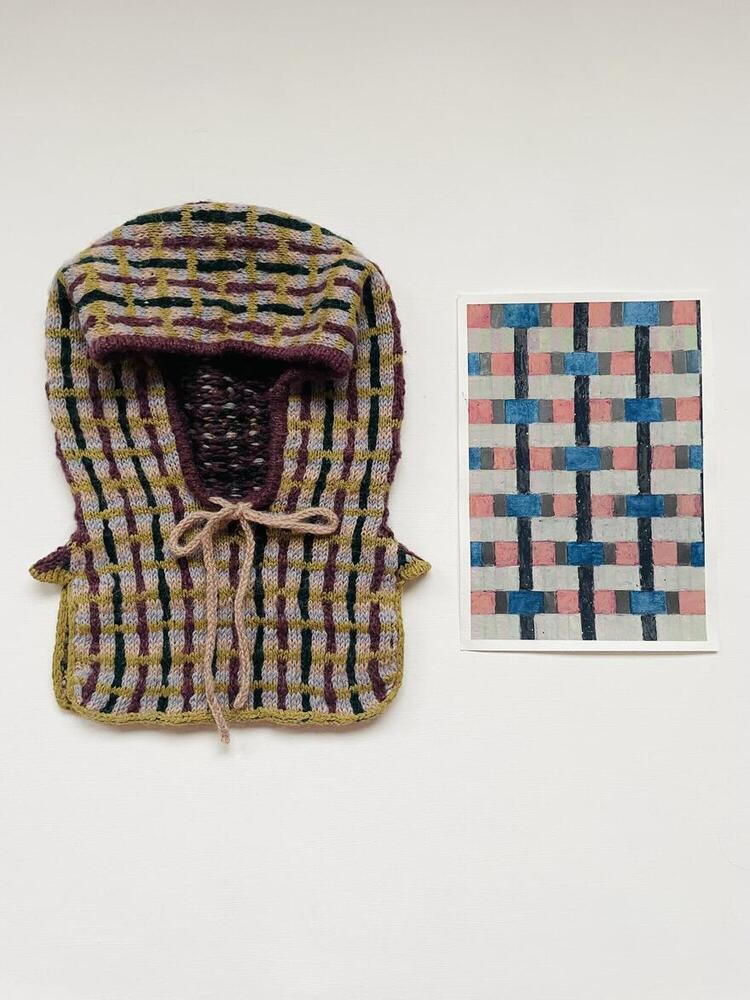
Bries Geerts creates unique, handmade knitwear. She uses yarns ranging from secondhand yarn to wool recovered from a twilled sweater. The yarns are finds; each garment is unique.
Knitting a garment involves a lot of rhythm and rules that must be followed. You count your rows, increases, decreases, and colors. This translates into a drawn (knitting) pattern, a secret code for that unique knitted garment.
The same rules and rhythms shape drawn compositions. The graphic patterns and color combinations were also tested in drawings.
The lines between something practical—a garment, a knitting pattern—and a standalone work of art blur. If you look closely and count, you might be able to decipher the code and see which garment belongs to which drawing.
Laura Caroen
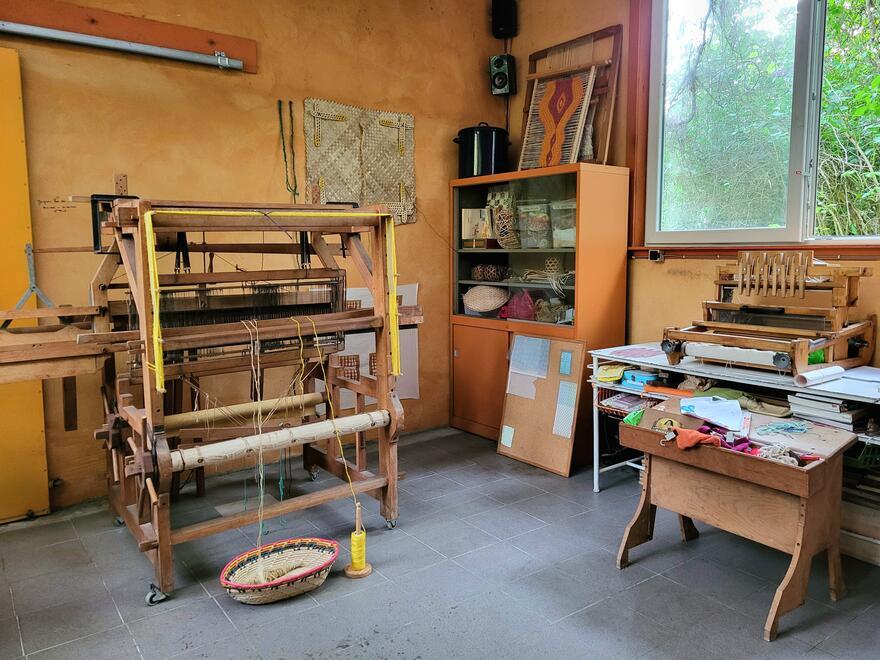
As a textile artist, Laura is deeply interested in flexible materials, specifically natural and recycled fibers. She explores these materials in great detail. Later, she uses techniques like weaving, braiding, and knotting to reconnect the fibers.
Because I'm very aware of material values, I cherish collaborations with communities that value their raw materials and traditional craft techniques.
I position myself between art and design, with participatory collaborative projects playing a crucial role in my work. My inspiration comes from the people I meet during my research trips and co-creation projects, or when I explore my own garden.
Judit Lara
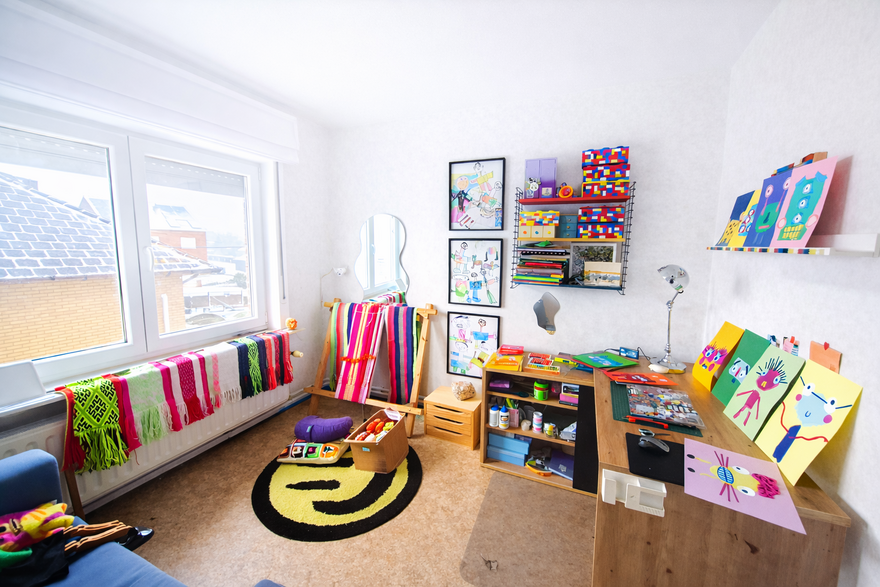
Judit Lara is a Chilean visual artist. Her work lies at the intersection of textile art and drawing, using color as a symbolic language. She explores memory, spirituality, and the experience of migration. The artisanal process serves as a space for connection, care, and the reconstruction of identity.
From a perspective influenced by indigenous Latin American worldviews, the artistic process becomes a ritual and meditative act. Textiles serve as a transitional space between origin and the present, between the intimate and the collective. Judit's work combines a playful aesthetic and reflections on identity, feminism, and justice.
Fleur Julliat
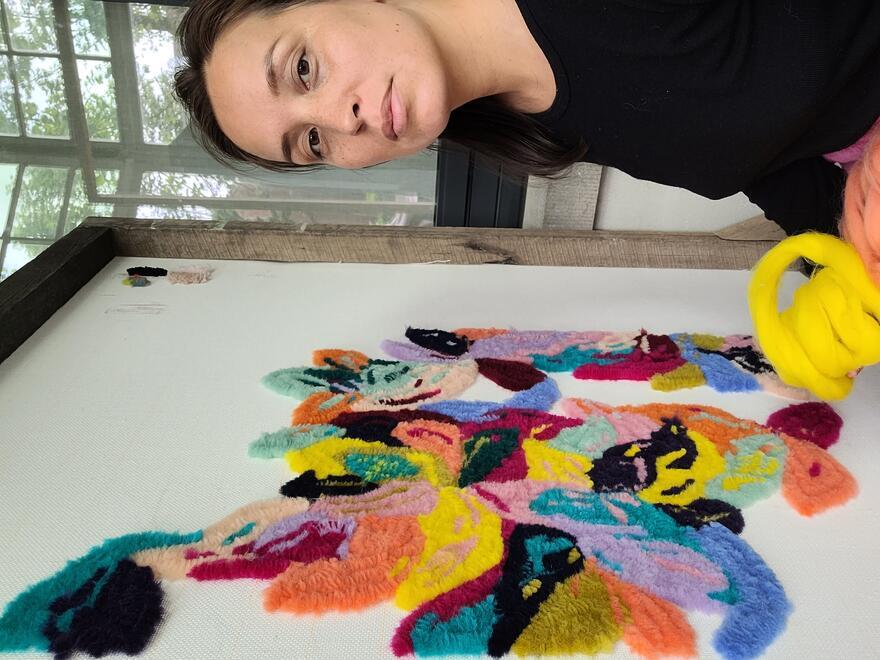
Fleur Julliat creates unique handicrafts that combine painting and textile art. She works with techniques like tufting and weaving. Her work is designed to touch both the senses and the soul.
Lamine Diouf
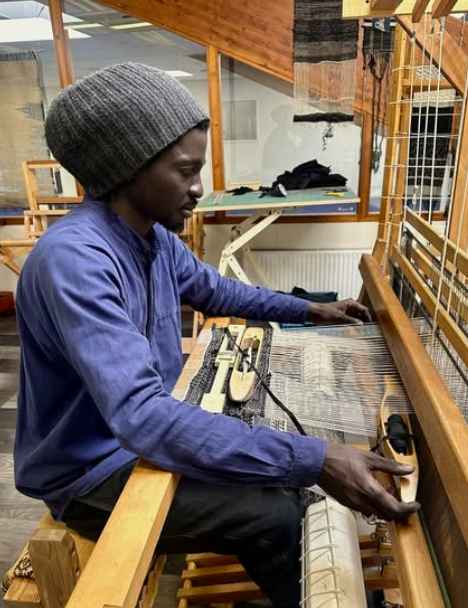
Lamine began his artistic training at the Ecole Nationale des Beaux Arts in Dakar. After moving to Europe, he focused more on performing arts and poetry, and took his first steps in the art of textile weaving. The interplay between these different disciplines allows him to tell a story about his origins, his past and his present, to live as a mediator between different cultures and traditions, and to foster mutual understanding. Since 2020, Lamine Diouf has been working on the process of artisan hand-woven garments for the menswear collection of Jan-Jan van Essche, Antwerp.